A new set of tires is a significant investment, and the first few thousand miles have a big effect on how evenly that fresh tread wears. If the vehicle's alignment is already off, the new tires immediately begin working against incorrect wheel angles.
The frustrating part is that the car can still feel normal. It may drive straight, the steering wheel may look centered, and there may be no obvious warning from behind the wheel. Meanwhile, the inside or outside edges of those brand-new tires can already be wearing faster than they should.
New Tires Do Not Correct an Existing Alignment Problem
Installing new tires changes the rubber touching the road, but it does not change the suspension geometry. If toe, camber, or caster was out of specification before the tire replacement, it will still be out afterward.
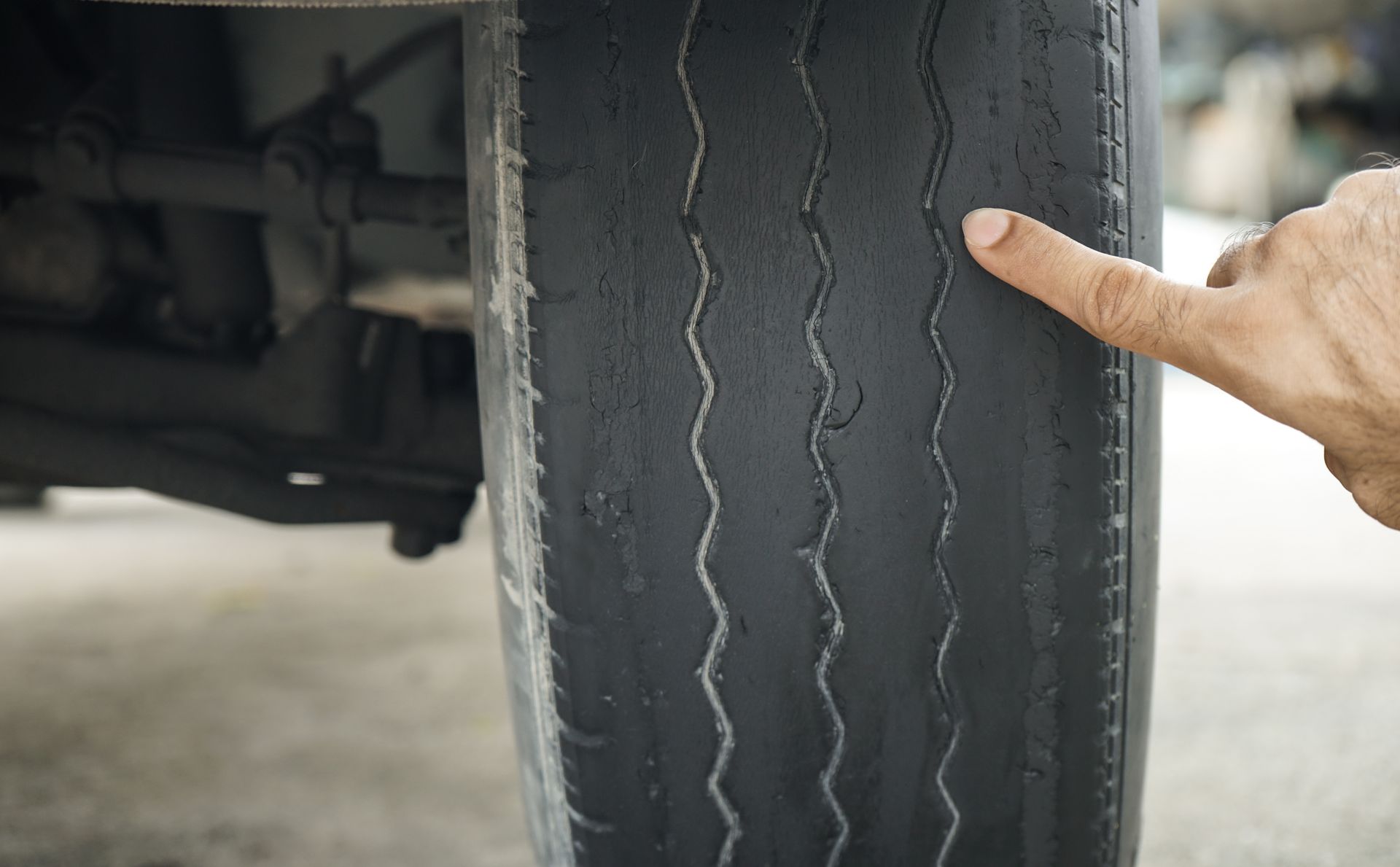
We often see old tires with uneven wear that already tell part of the story. Feathering, excessive inside-edge wear, or one tire wearing differently from the others gives us a reason to check alignment before putting thousands of miles on the new set. Fresh tread should start its life on a vehicle whose wheels are pointing where they are supposed to.
Incorrect Toe Can Wear New Tires Surprisingly Fast
Toe describes whether the tires point slightly inward or outward when viewed from above. The adjustment is measured in small amounts, but a small error can scrub tread away every time the vehicle moves.
A car with poor toe can still drive reasonably straight because both front tires can be misaligned in ways that balance each other out. The driver feels little or no pull, yet the tread develops a feathered texture and wears much faster. Getting the alignment checked when you install new tires gives us a chance to correct the problem before the damage becomes permanent.
Your Car Does Not Have to Pull to Need an Alignment
Pulling left or right is one possible symptom of an alignment problem, but it is not a requirement. Some vehicles with significant tire wear still track straight on a level road.
Other clues include an off-center steering wheel, uneven tread, steering that feels nervous at highway speed, or a vehicle that does not return to center cleanly after a turn. During an inspection, we also look at the wear pattern on the old tires. Their condition can reveal problems that were not obvious during everyday driving.
Alignment Helps New Tires Handle the Way They Should
New tires improve traction only when they meet the road correctly. Alignment angles affect the shape and position of the contact patch, especially during braking and cornering.
If a wheel is leaning or pointing too far in the wrong direction, the tire cannot use its tread as evenly as intended. That can make steering feel less precise and reduce the benefit of installing fresh tires in the first place. Correct alignment gives the new set the best chance to provide predictable handling from the beginning.
Suspension Problems Should Be Fixed Before the Alignment
An alignment cannot stay correct if worn suspension or steering parts allow the wheels to move around. Loose tie rods, worn ball joints, damaged control arm bushings, or failing wheel bearings can all change alignment while the vehicle is being driven.
At our shop, we check for excessive looseness before making adjustments. If a worn component is allowing movement, repairing that part comes first. Setting alignment angles on a suspension that cannot hold those angles only produces good numbers temporarily, and the new tires can start wearing unevenly again soon afterward.
Potholes and Curb Impacts Can Change Alignment Without Obvious Damage
A hard pothole hit or curb strike does not have to bend a wheel badly enough for you to notice it immediately. Suspension components and alignment settings can shift from impacts that seemed minor at the time.
If the old tires are being replaced after months of rough-road driving, checking alignment makes sense even if the vehicle has never developed a strong pull. Regular maintenance cannot prevent every pothole, but checking tire wear and wheel angles at the right time can keep one impact from shortening the life of an expensive new set.
An Alignment Protects the Money You Just Spent on Tires
Replacing four tires and then allowing them to wear unevenly is an expensive way to discover an alignment problem. Once tread has been scrubbed away, an alignment cannot put it back.
We prefer to start new tires with the best possible setup. That means correct pressure, balanced wheel assemblies, healthy steering and suspension parts, and alignment angles within specification. Not every vehicle requires major adjustment when tires are installed, but measuring the alignment tells us whether anything needs correction instead of waiting for the tread to show us later.
Get Wheel Alignment Service In Edmonds, WA, With Factory Direct Tire Sales
If you are installing new tires or your old set showed uneven wear, Factory Direct Tire Sales in Edmonds, WA, can check the alignment and make sure your steering and suspension give your new tires a proper start.
Schedule a wheel alignment with your tire service and protect as much of that new tread as possible.