Tires are designed to roll straight and keep as much usable tread on the road as possible. When wheel alignment moves out of specification, the tires can begin sliding or leaning slightly as they travel. You may not feel anything unusual from the driver's seat, but the tread can still be wearing away mile after mile.
Poor alignment is especially frustrating because the damage cannot be reversed. Once an edge has been scrubbed down or a tread pattern has become badly feathered, correcting the alignment will stop further damage but will not restore the rubber that is already gone.
1. Incorrect Toe Scrubs the Tread Across the Road
Toe describes whether the tires point slightly inward or outward when viewed from above. The adjustment is small, but even a relatively minor error can force the tires to travel at an angle instead of rolling cleanly forward.
That sideways scrubbing wears tread faster and can create a feathered feel when you run your hand across the tire. At our shop, we commonly check toe when both front tires show strange wear, even if the vehicle still tracks reasonably straight. A car does not need to pull left or right for the toe to be far enough out to shorten tire life.
2. Excessive Camber Wears One Edge Much Faster
Camber describes how much the wheel tilts inward or outward when viewed from the front of the vehicle. Some camber is designed into the suspension, but too much can load one side of the tread far more heavily than the other.
Excessive negative camber often shows up as inside-edge wear, which is easy to miss because that part of the tire is difficult to see without turning the wheels or raising the vehicle. A tire can look healthy from the outside while the inner shoulder is nearly worn through. During an inspection, we check across the entire tread width instead of judging condition from the most visible edge.
3. Misalignment Can Create Feathering and Irregular Wear
Alignment problems do not always produce a clean strip of wear along one edge. They can create feathering, diagonal wear, or other irregular patterns that make the tire noisy and rough.
You may begin hearing a humming sound that changes with road speed or notice the steering feels less settled on the highway. Once the tread wears into an uneven pattern, the tire can continue making noise even after the alignment is corrected. Catching the problem earlier preserves more usable tread and reduces the chance that a relatively new tire becomes unpleasant to drive on.
4. Poor Alignment Can Make One Tire Wear Faster Than the Others
A vehicle's four tires should wear at reasonably similar rates when pressures, rotation, suspension condition, and alignment are all where they should be. If one wheel is sitting at the wrong angle, that tire can lose tread much faster than the others.
That creates another expense because replacing one tire is not always straightforward. On some all-wheel-drive vehicles, a large difference in tread depth between tires can create drivetrain concerns and may require replacing more than the single damaged tire. Correcting alignment before the wear becomes severe helps protect the whole set rather than just one corner.
5. Alignment Problems Can Keep Damaging Every New Set
Installing fresh tires does not correct suspension geometry. If the old tires wore unevenly because toe or camber was out of specification, the new tires will begin experiencing the same forces as soon as they go back on the road.
Signs worth watching for include:
- Inside or outside edges wearing faster
- Feathered tread blocks
- A steering wheel that sits off-center
- Repeated uneven wear after tire replacement
- Steering that feels nervous at highway speed
- New wear after a pothole or curb impact
This is why we pay attention to the old tires before throwing them away. Their wear pattern can tell us what the vehicle has been doing for thousands of miles and whether an alignment check should be part of installing the next set.
Alignment Wear Is Not Always Caused by Adjustment Alone
Sometimes the alignment numbers are wrong because a component has shifted. Other times, worn suspension or steering parts are allowing the wheel to move while the vehicle is being driven.
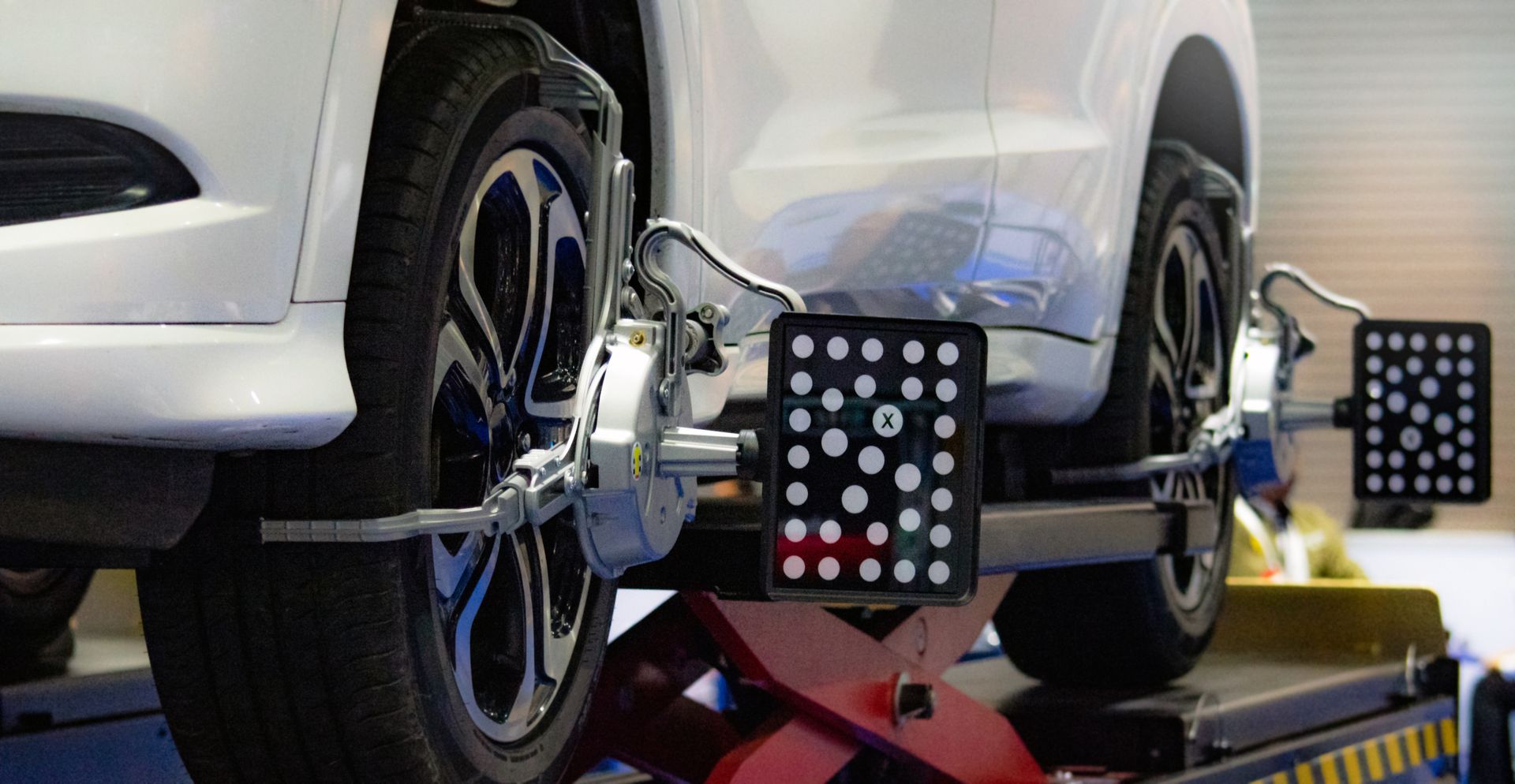
Loose tie rods, worn ball joints, damaged control arm bushings, weak wheel bearings, or bent suspension parts can all affect tire position. An alignment machine can measure the angles, but adjustments will not stay correct if worn parts cannot hold the wheel in place. Regular maintenance gives us a chance to find that looseness before another set of tires pays the price.
Get Wheel Alignment Service In Edmonds, WA, With Factory Direct Tire Sales
If your tires are wearing unevenly, developing feathered tread, or losing one edge faster than the rest, Factory Direct Tire Sales in Edmonds, WA, can check the alignment, tire condition, and related steering and suspension components.